Enhancing Urban Resilience
Researchers from Japan’s Shibaura Institute of Technology have developed an innovative AI-driven approach to predict soil liquefaction risks, significantly improving upon existing methods. This breakthrough has far-reaching implications for urban planning and infrastructure development in earthquake-prone regions worldwide.
Key Advancements
- Integration of machine learning techniques with geotechnical and geographical data
- High accuracy in predicting soil classifications and N-values crucial for liquefaction risk assessment
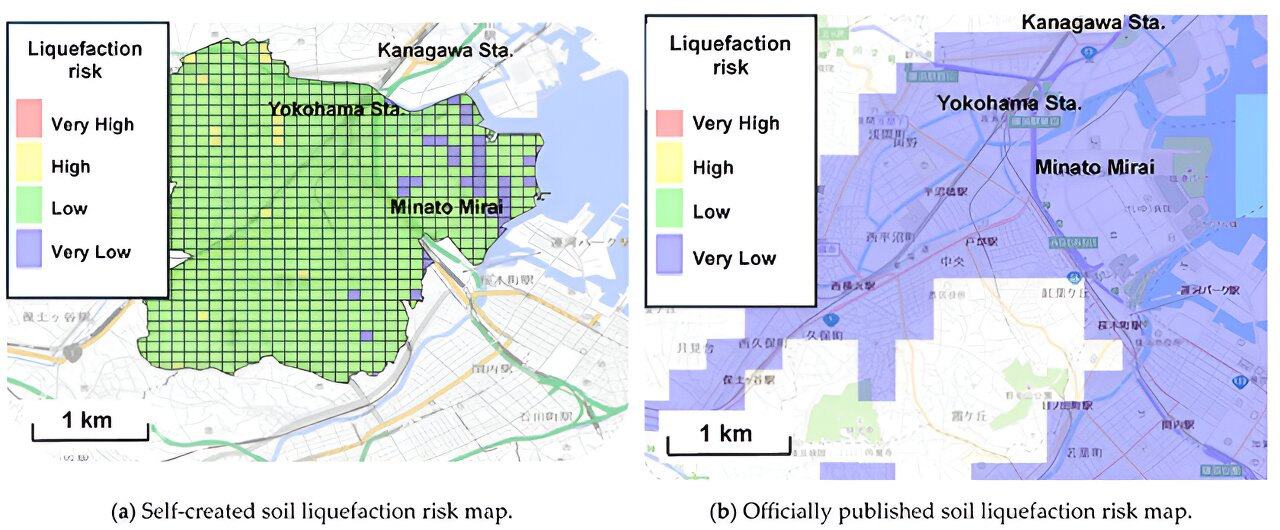
- Creation of comprehensive risk maps that surpass officially published versions
- Validation against extensive geotechnical survey data
Impact on Smart City Development
This research marks a significant step forward in the pursuit of smart, resilient cities. By leveraging AI and machine learning, urban planners and engineers can now access more accurate and dynamic risk assessments. This advancement enables:
- Informed decision-making for infrastructure development
- Enhanced emergency response planning
- Improved community engagement through accessible risk information
The study, focused on Yokohama, Japan, demonstrates the potential for this technology to be applied globally, particularly in rapidly urbanizing areas prone to seismic activity. As cities worldwide grapple with the challenges of climate change and natural hazards, this AI-driven approach offers a powerful tool for building more resilient and sustainable urban environments.