
Understanding AI’s Role in Health Information Seeking
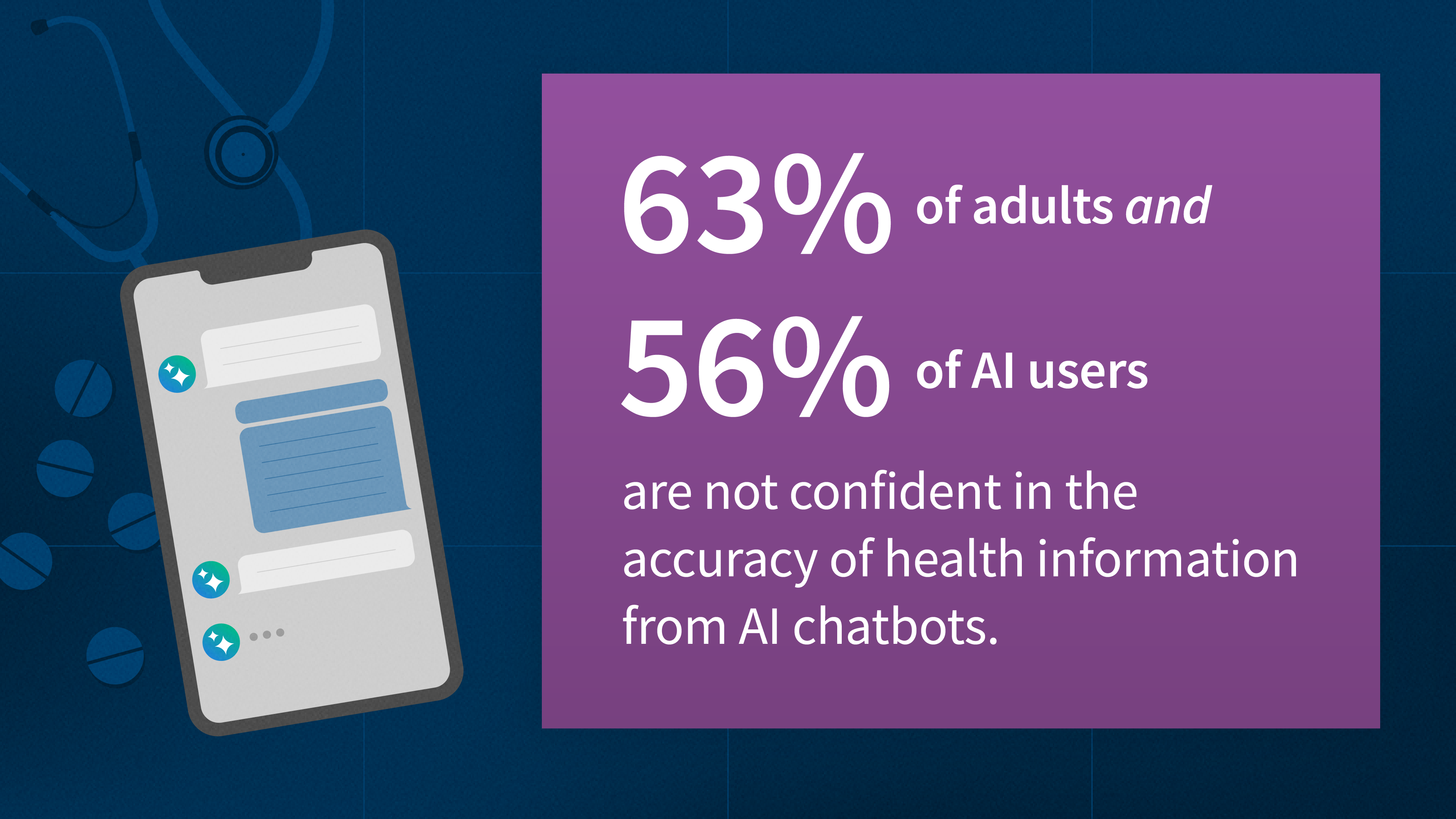
Recent findings reveal that a significant portion of the adult population is engaging with artificial intelligence (AI), yet many express doubts about its reliability, especially concerning health information. Approximately two-thirds of adults have interacted with AI, but only a third do so regularly. Alarmingly, a majority feel uncertain about distinguishing true information from false when using AI chatbots. This skepticism extends to health-related queries, where only a small fraction of users trust AI for accurate health advice.
Key Insights
- Roughly 64% of adults have used AI, but only 34% engage with it weekly.
- Confidence in identifying true vs. false information from AI is low, with only 42% expressing some level of confidence.
- Only 17% of adults use AI chatbots monthly for health advice, with 25% of younger adults doing so.
- Trust in AI for health information is notably low, with just 29% believing it provides reliable health advice.
The Bigger Picture
These findings highlight a crucial gap between the increasing use of AI and the public’s trust in its outputs, particularly for health information. As AI becomes more integrated into daily life, understanding its influence on health-related decisions is vital. The uncertainty surrounding AI’s role in providing accurate health information could affect how individuals seek and trust medical advice. This skepticism may hinder the potential benefits of AI in healthcare if not addressed, emphasizing the need for improved transparency and reliability in AI technologies.





