
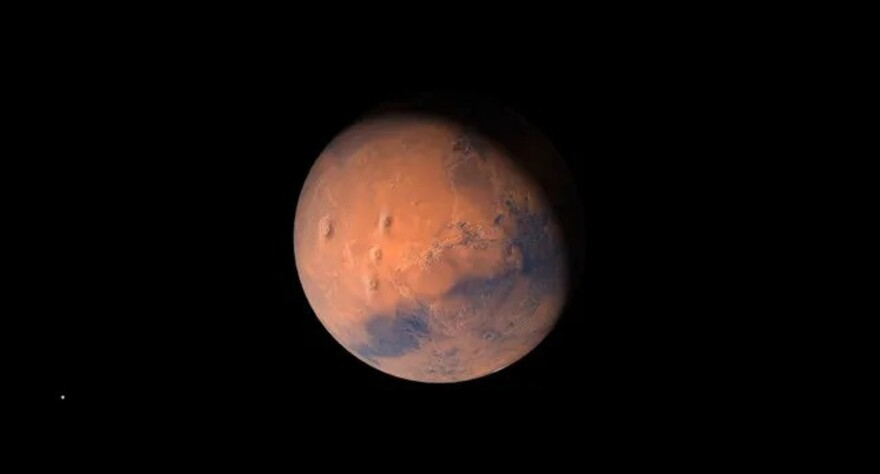
Exploring the Future of Mars Missions
The Rosalind Franklin rover, part of the ExoMars mission, aims to explore Mars for signs of life using advanced technology. It will carry a cutting-edge instrument called the Mars Organic Molecule Analyzer (MOMA), which will analyze samples from the Martian surface. The rover is scheduled for launch no earlier than 2028 and will utilize artificial intelligence to enhance its data analysis capabilities.
Key Features of MOMA and Its Role
- MOMA is designed to reach depths of 6.6 feet (2 meters), far deeper than previous rovers, allowing for a more thorough search for ancient organic materials.
- It employs mass spectrometry, a technique that identifies molecules based on their weight, to analyze complex mixtures in the samples.
- The instrument also features laser desorption mass spectrometry, which uses ultraviolet light to release organic molecules for analysis.
- Machine learning algorithms are being developed to help scientists quickly interpret the data collected by MOMA, improving efficiency in identifying potential organic compounds.
Significance of This Mission
The integration of AI and advanced analytical tools marks a significant leap in space exploration. By enhancing the chances of discovering past life on Mars, this mission could reshape our understanding of life’s existence beyond Earth. The use of machine learning not only streamlines data analysis but also paves the way for more autonomous missions in the future, allowing scientists to focus on broader questions about life in the universe.





