
Understanding the Research
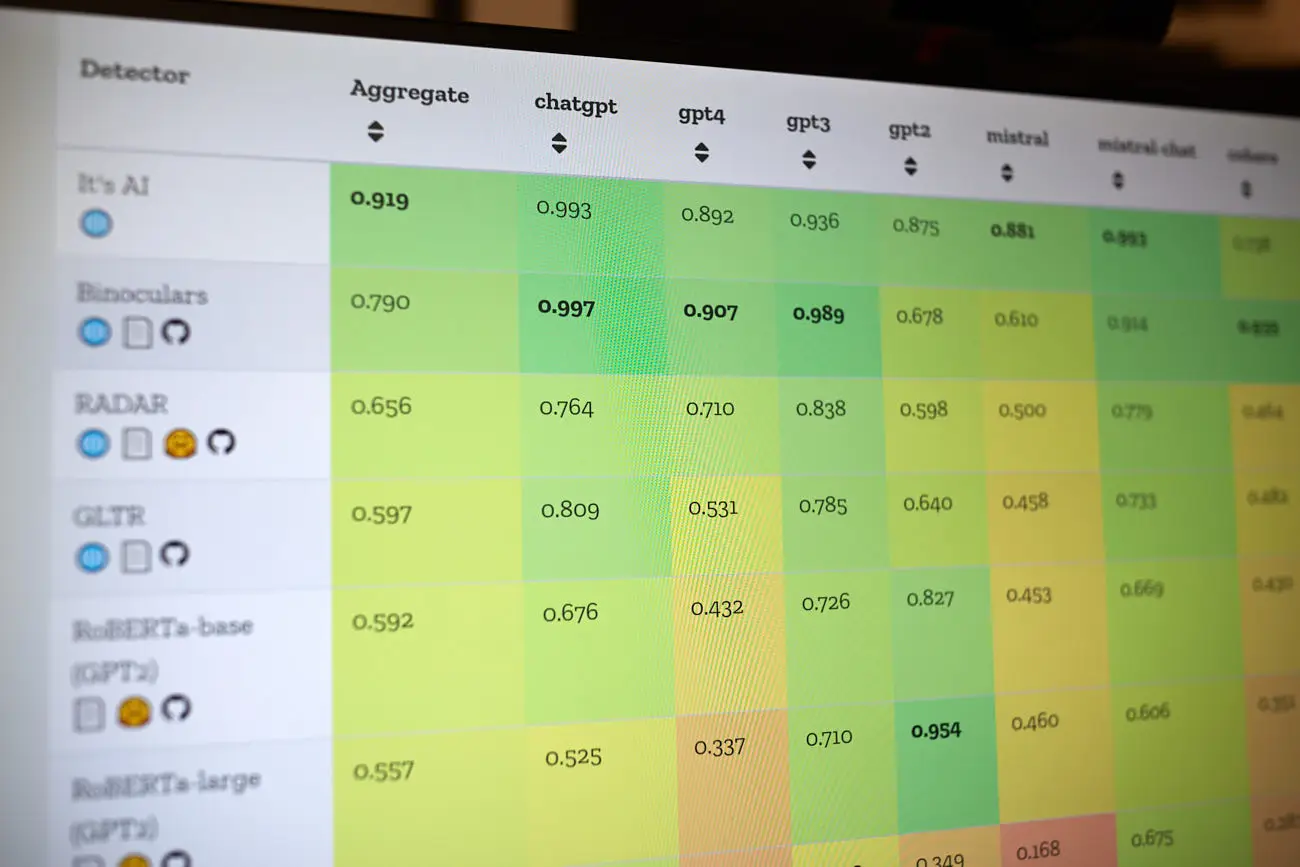
New findings from the University of Pennsylvania reveal significant flaws in many AI detection tools. These tools, intended to identify AI-generated content, often produce high false positive rates. This raises concerns for educators and society as a whole, especially in a time when misinformation is rampant. The study’s lead author, Chris Callison-Burch, emphasizes the need for caution when using these tools, particularly in academic settings. He suggests that professors should not hastily accuse students of cheating based solely on AI detection results.
Key Findings
- Many AI detection tools, particularly open-source models, have dangerously high false positive rates.
- Some of the most touted detection systems fail against simple text alterations, such as adding whitespace or misspellings.
- Detectors often struggle to generalize across different AI models, performing well with popular models like ChatGPT but poorly with lesser-known ones.
- Callison-Burch advocates for improved tools and transparency, providing a dataset of 10 million AI-generated texts to aid in better benchmarking.
Why This Matters
The implications of this research are profound. As generative AI becomes more integrated into various sectors, the ability to accurately detect AI-generated content is critical. Mislabeling human work as AI-generated can have serious consequences for students and professionals alike. Additionally, as generative AI tools continue to evolve, the arms race between those creating AI content and those trying to detect it will intensify. This research aims to push for more reliable detection methods, benefiting both academia and broader society.





