Overview of AI Life Science Research Growth
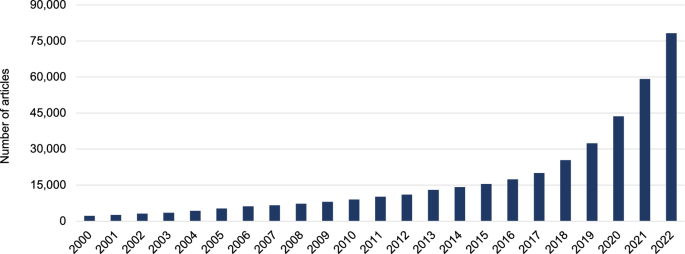
AI life science research has seen remarkable growth, with a 20% annual increase in publications since 2010. The US and China are the leading contributors, together accounting for 44% of global productivity from 2000 to 2022. The UK, Germany, and Japan follow, but countries in Africa and Latin America show significantly lower involvement. This geographic concentration raises concerns about the disparity in research output and the potential for innovation to be stifled in lesser-represented regions.
Key Findings
- The US leads with 101,195 AI life science articles, while China follows closely with 73,129.
- Research topics are diverse, with no significant geographic specialization; common topics include computer vision and neuroscience.
- AI clinical research constitutes about 20% of the total publications, with the US and China again dominating this area.
- Quality-adjusted productivity shows that countries like the US and Australia publish more in high-ranking journals compared to China and Latin American nations.
Significance of the Research Landscape
Understanding the dynamics of AI life science research is crucial for fostering global collaboration and innovation. The concentration of productivity in just a few countries could limit the diversity of ideas and solutions in healthcare. By identifying gaps and promoting international partnerships, especially with underrepresented regions, the global research community can enhance the quality and relevance of AI applications in life sciences. This approach can lead to breakthroughs that benefit a wider population and improve health outcomes globally.