Understanding the Challenge
The rise of AI and machine learning has brought about significant concerns regarding job displacement, data privacy, and environmental sustainability. As these technologies evolve, they require vast amounts of computational power, leading to increased energy consumption. This surge in demand can strain electrical grids and raise questions about the environmental impact of AI, particularly when many data centers rely on non-renewable energy sources. Addressing these energy needs is crucial for ensuring a sustainable future for AI technology.
Key Insights
- AMD aims to enhance energy efficiency in high-performance computing by 30 times by 2025, a goal known as “30×25.”
- Currently, AMD has achieved a 13.5 times improvement in energy efficiency since the goal was set, with new server processors and accelerators on the horizon.
- The company takes a holistic approach, optimizing not just its chips but also collaborating with partners to enhance the entire AI pipeline, from data processing to software.
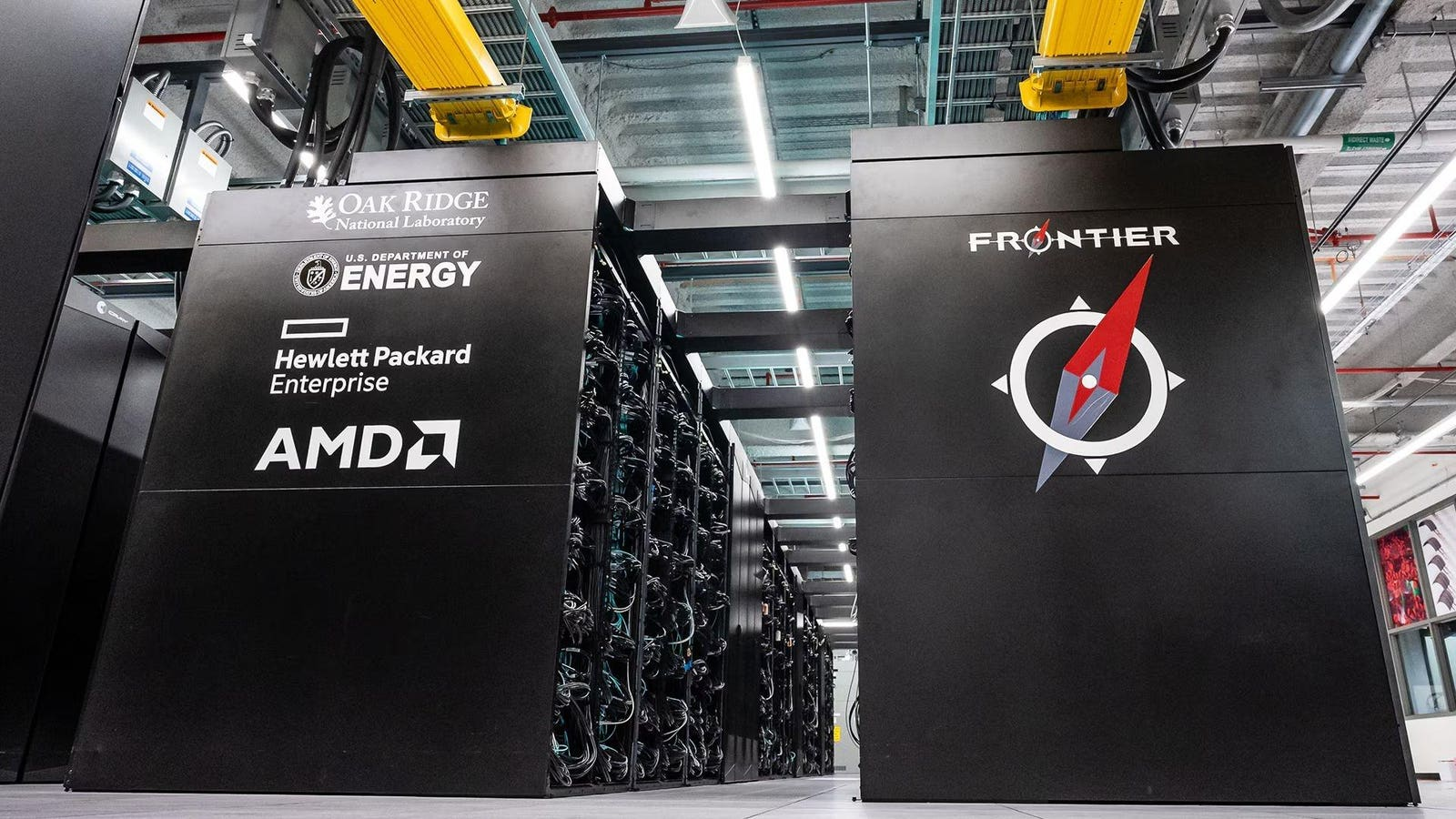
- AMD has made significant efficiency gains year over year, with its supercomputers ranking high on the GREEN500 list for energy efficiency.
The Bigger Picture
As AI continues to integrate into various sectors, its energy demands will only increase. AMD’s commitment to improving energy efficiency reflects a broader need for sustainable practices in technology development. The company’s proactive measures not only address immediate concerns but also set a benchmark for the industry. By focusing on efficiency, AMD is paving the way for a future where AI can thrive without compromising the environment, ensuring that technological advancements align with ecological responsibility.