
Revolutionizing Self-Driving Technology
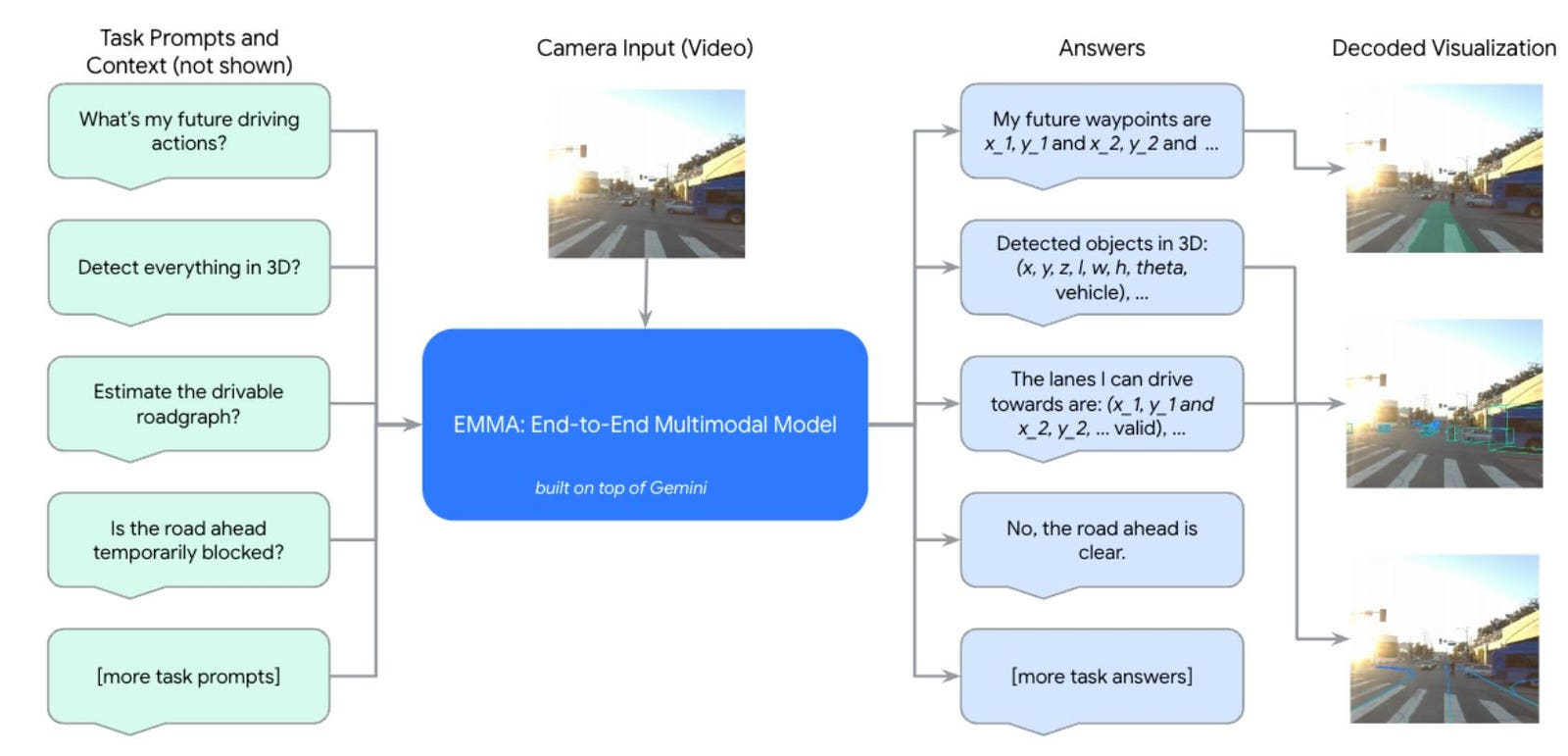
Waymo’s latest innovation, EMMA, represents a significant shift in autonomous driving technology. This system leverages the power of Google’s Gemini, a large language model (LLM), to create a unique approach to self-driving vehicles. Unlike traditional methods, EMMA relies primarily on text-based inputs and outputs, demonstrating the versatility and potential of LLMs in unexpected applications.
Key Features and Comparisons:
- Uses only cameras, eschewing LIDAR and other sensors
- Employs self-supervised training without data labeling
- Utilizes end-to-end learning and operation
- Integrates a text LLM with explanation capabilities
- Operates without high-definition maps, relying on text-based navigation commands
Implications for the Future of Autonomous Driving
While EMMA is still in the research phase, its development highlights the ongoing evolution of self-driving technology. It showcases the potential for text-based AI models to contribute significantly to autonomous systems, potentially simplifying and streamlining the development process. However, Waymo’s current operational system, which has achieved impressive milestones in real-world driving, remains distinct from EMMA, emphasizing the company’s multi-faceted approach to advancing self-driving technology.





