Overview of Atlas’s Capabilities
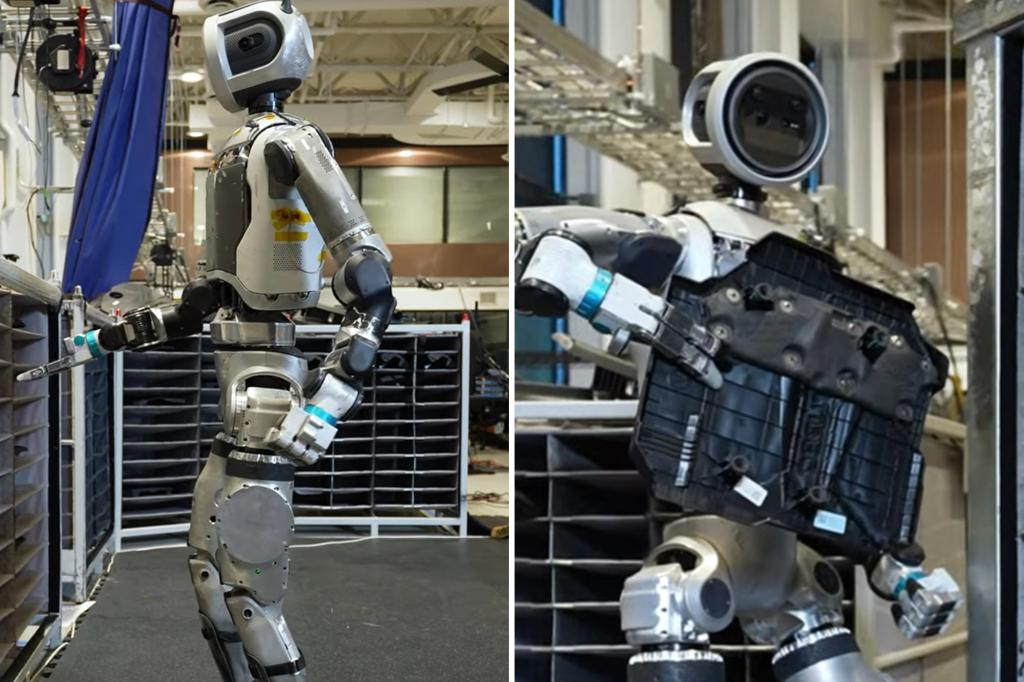
Boston Dynamics has showcased its latest version of the Atlas humanoid robot, demonstrating its ability to perform tasks autonomously without human assistance. The newly released video illustrates Atlas working in a simulated factory environment, where it moves engine covers and navigates containers using a mobile sequencing dolly. This advancement marks a significant step in robotics, as Atlas employs a machine learning vision model that allows it to adapt to its surroundings in real-time.
Key Features of the New Atlas
- Atlas operates fully autonomously, generating all movements online without pre-programmed instructions.
- The robot can identify and react to changes in its environment, enhancing its operational efficiency.
- It is now fully electric, offering a wider range of motion compared to previous hydraulic models.
- The robot’s vision system highlights objects it interacts with, providing a better understanding of its tasks.
Significance of this Development
The introduction of the Atlas robot is a major leap for robotics and automation, indicating a future where machines can handle complex tasks independently. While social media reactions have raised concerns about the robot appearing “creepy,” its capabilities suggest that it could be valuable in various commercial applications. Experts anticipate that it may take years before such robots are integrated into everyday life, but the progress made by Boston Dynamics positions them at the forefront of this technological evolution.