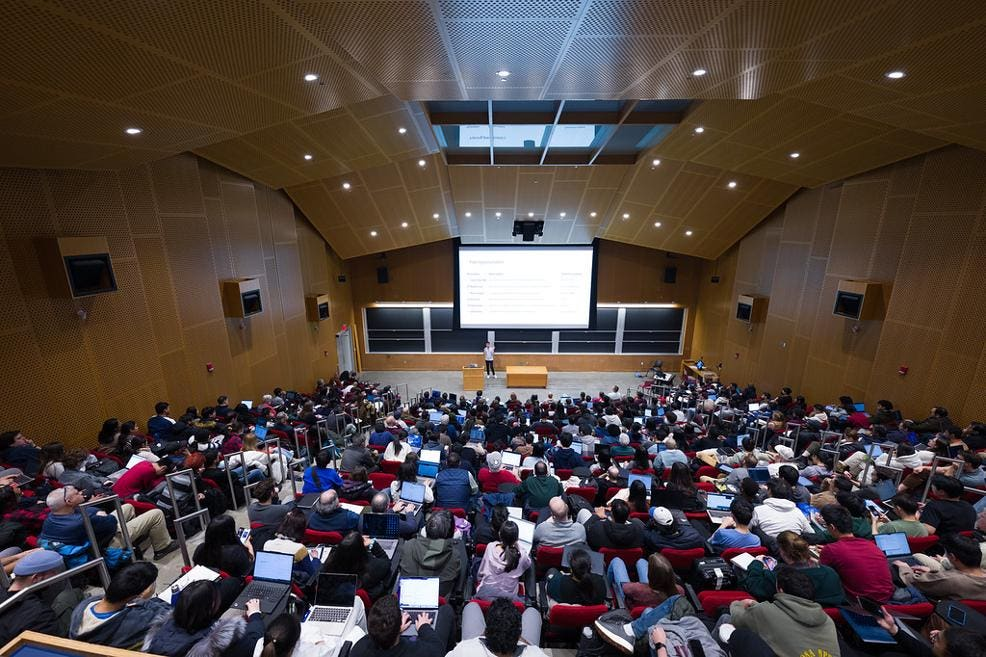
Understanding the Landscape of AI Education
The evolution of artificial intelligence (AI) is complex and rapidly changing. As technology advances, it becomes essential to consider the role of academia in shaping future experts in the field. At MIT, a Deep Learning class led by Ava and Alexander Amini is preparing students for careers in AI. Recent guest speakers, Peter Grabowski from Google Gemini and Maxime Labonne, provided valuable insights into large language models (LLMs) and their applications.
Key Insights from the Class
- Peter Grabowski discussed the importance of parameters in LLMs, explaining how systems with billions of parameters enhance AI capabilities.
- He emphasized the significance of a diverse data set to prevent models from getting stuck in repetitive loops.
- Grabowski raised concerns about jailbreaking and the potential misuse of AI systems by malicious actors.
- Maxime Labonne introduced the concept of liquid networks, which optimize LLMs to perform better with fewer parameters, revolutionizing enterprise IT.
- Labonne elaborated on the stages of model development, highlighting the importance of preference alignment and real-life conversation data for training AI.
The Bigger Picture: Why It Matters
The insights shared in this class are crucial for understanding the future of AI. As industries increasingly rely on AI technology, the need for well-trained professionals becomes paramount. By integrating academic perspectives with practical applications, students can contribute to the responsible development of AI. This blend of knowledge and skills will help address ethical concerns and improve the effectiveness of AI solutions in various sectors.