Understanding the Revolution in AI Agents
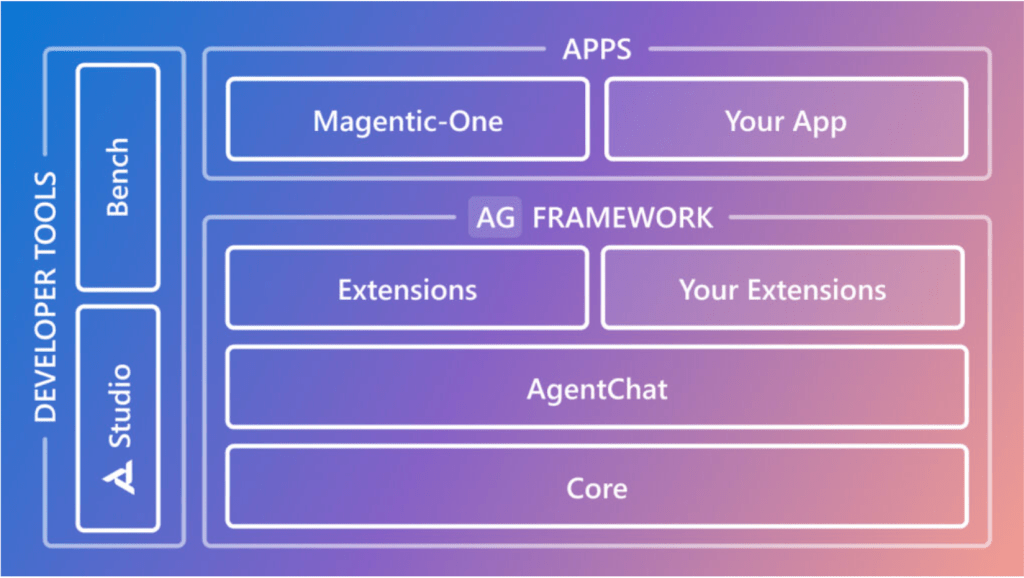
Microsoft’s AutoGen v0.4 release signifies a pivotal moment in the evolution of AI agents. This new version introduces a flexible, scalable framework designed to tackle the complexities of multi-agent systems in enterprise settings. It highlights the shift towards asynchronous, event-driven architectures, allowing agents to perform tasks concurrently. This advancement enhances efficiency and speeds up task execution, which is crucial for enterprises aiming for better performance. With this update, developers gain insights into the future capabilities of agentic AI and how it stands against competitors like LangChain and CrewAI.
Key Features and Comparisons
- AutoGen v0.4 employs asynchronous architecture, enabling parallel task execution.
- Microsoft offers a dual approach, providing both a flexible framework and pre-built applications through Copilot Studio.
- AutoGen integrates seamlessly with Azure, setting it apart from competitors.
- The focus is on extensibility, allowing custom tools tailored to enterprise needs.
The Bigger Picture: Why It Matters
The advancements in AutoGen highlight a broader trend in AI development where usability and scalability are prioritized. As enterprises prepare to adopt AI agents, they must first establish robust data infrastructures. The integration of frameworks like AutoGen into existing systems can facilitate smoother transitions. Ultimately, the success of AI agents will depend on their ability to balance technical capabilities with real-world applications, ensuring they meet the demands of various industries, particularly those with strict compliance standards.