
Understanding the Innovation
A new project led by Los Alamos National Laboratory introduces a machine learning algorithm designed to enhance the performance of particle accelerators. These machines are crucial for various scientific fields, including nuclear physics and cancer therapy. The innovative algorithm adapts in real time, making continuous adjustments to keep particle beams precise and efficient. This is essential since accelerators can experience changes in performance due to factors like temperature fluctuations and vibrations over time.
Key Features of the Machine Learning Approach
- A collaboration with Lawrence Berkeley National Laboratory has produced a system that combines adaptive feedback control, deep learning, and physics-based models.
- The new machine learning technique uses real-time data to improve the tuning process, allowing for non-invasive diagnostics during beam operations.
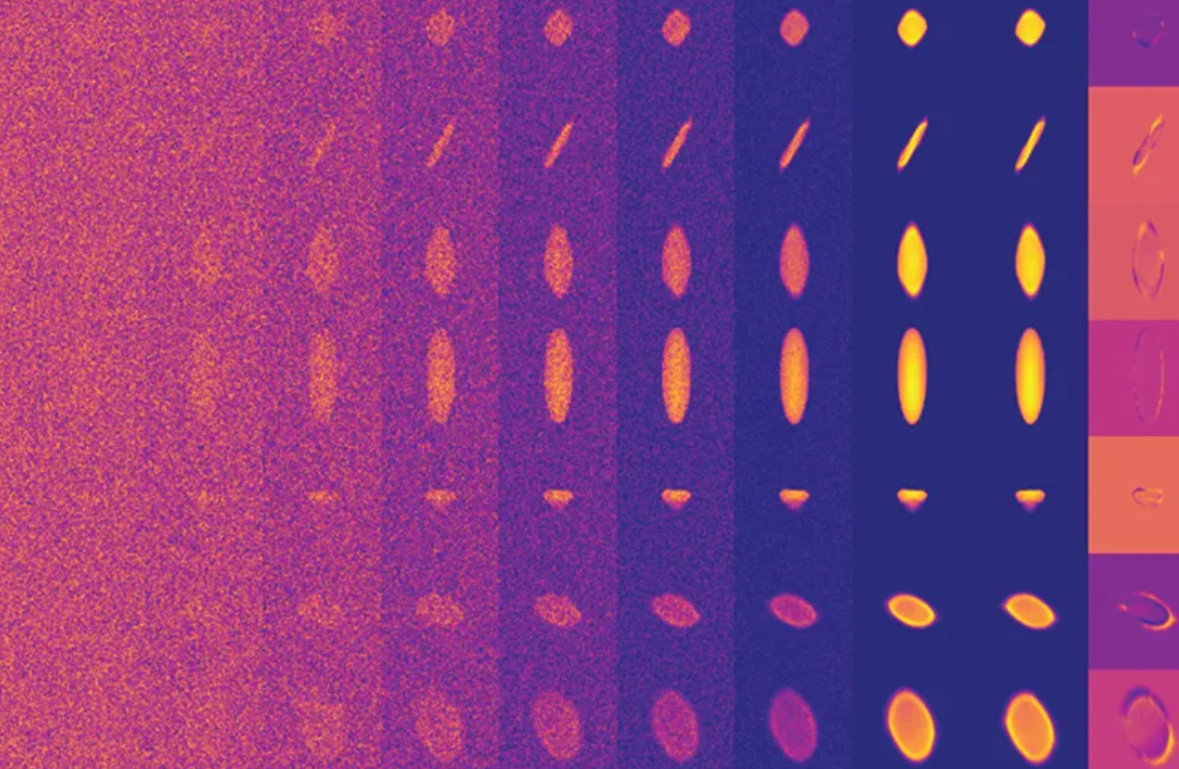
- The conditional diffusion variational autoencoder (cDVAE) was tested successfully at the European X-Ray Free-Electron Laser Facility, showing its ability to predict particle beam distributions accurately.
- This adaptive model can extrapolate beyond existing training data, making it versatile for various accelerator setups.
Significance of the Development
The advancements in machine learning for accelerator tuning represent a significant leap in scientific research capabilities. By ensuring that particle accelerators operate at optimal performance levels, researchers gain more beam time for experiments and can achieve more reliable results. This technology not only enhances the efficiency of current systems but also paves the way for future innovations in high-energy physics and materials science. Ultimately, the integration of AI into accelerator operations could lead to breakthroughs in scientific discovery.





