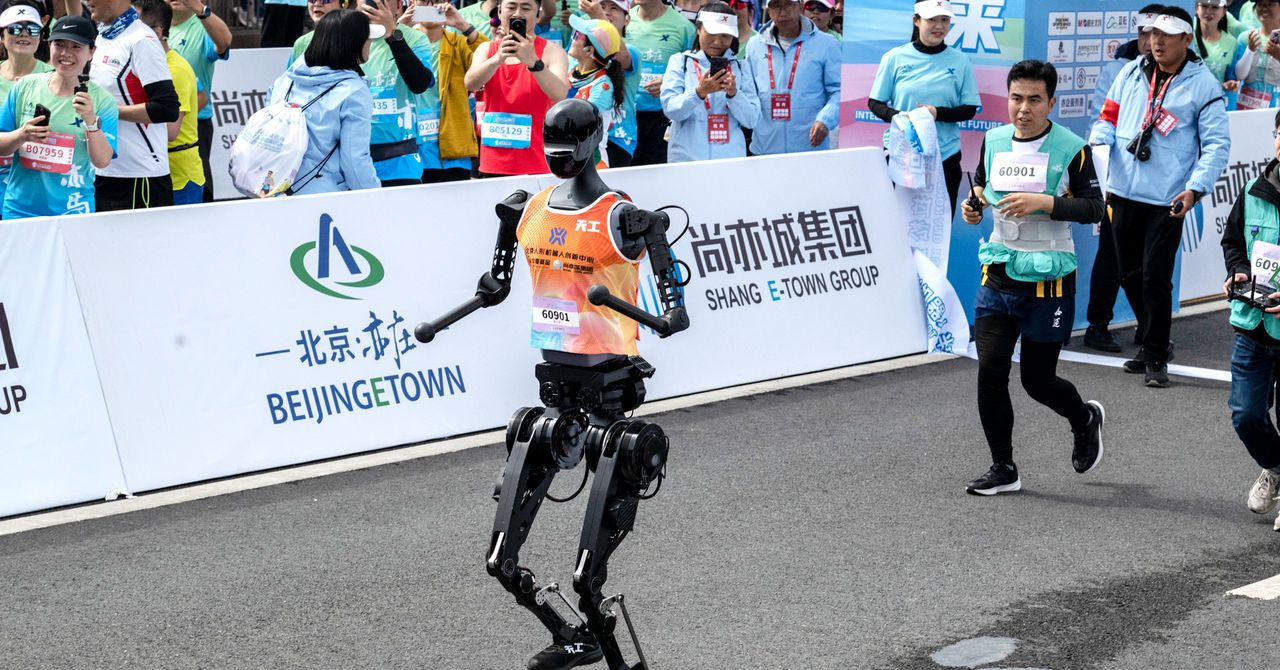
A unique event unfolded in Beijing as 12,000 human runners participated in a half marathon alongside 21 humanoid robots. This race is notable as it marks the first time that humans and bipedal robots competed, albeit on separate tracks. The event was organized by various branches of Beijing’s municipal government. While six robots completed the course, they fell short of matching the speed of human competitors. The fastest robot, Tiangong Ultra, finished in 2 hours and 40 minutes, after multiple battery changes and a fall. However, it barely qualified for a human participation award.
- The slowest human finishing time was 3 hours and 10 minutes. Tiangong Ultra was the only robot to come close to this time.
- Most robots struggled, with many falling during the race and needing replacements due to overheating issues.
- Robotics experts highlight that while humanoid hardware has improved, AI technology has not advanced significantly since 2021.
- The event sparked excitement and national pride, as many human runners took selfies with Tiangong Ultra.
This event is significant as it showcases the progress and limitations of China’s humanoid robot industry. While the robots demonstrated improved hardware capabilities, the challenges they faced underline the current state of robotics technology. The race serves as a reminder of the ongoing journey toward creating more capable and resilient robots, balancing excitement with the reality of their performance.