Understanding the Landscape of Generative AI
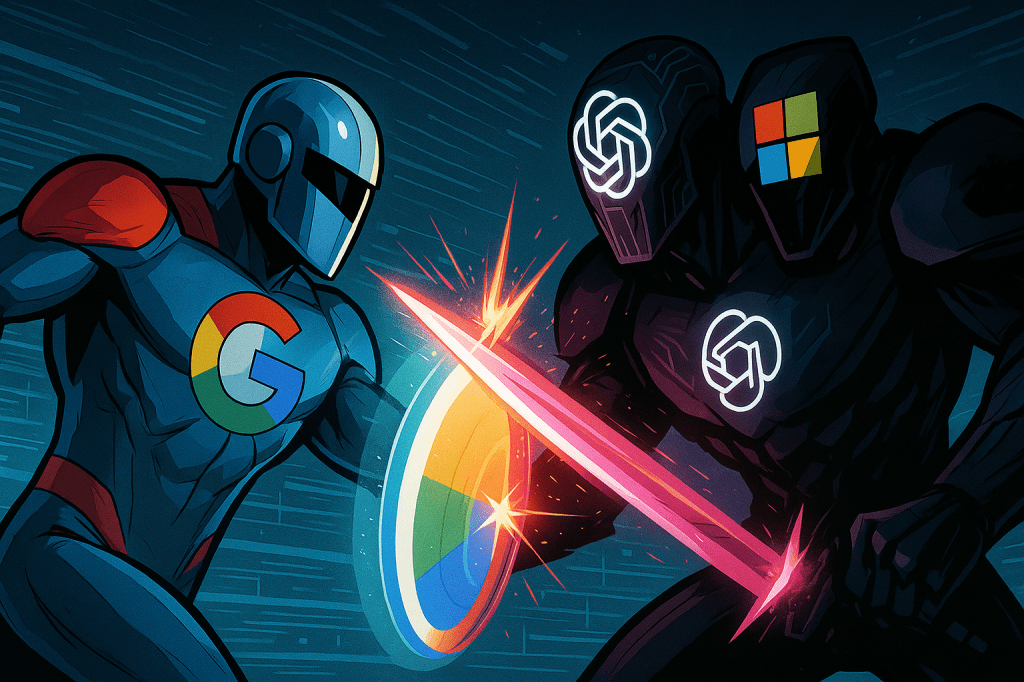
Rapid innovation in generative AI continues to reshape the technology landscape. OpenAI has recently launched its new models, while Google has responded with its own advancements. For enterprise leaders, selecting the right AI platform is not just about model performance; it involves a deeper understanding of the underlying ecosystems and their implications. This analysis focuses on the contrasting strategies of Google and OpenAI/Microsoft, highlighting critical factors such as compute economics, agent frameworks, model capabilities, and enterprise integration.
Key Insights
- Google’s custom Tensor Processing Units (TPUs) provide a significant cost advantage over OpenAI’s reliance on Nvidia’s expensive GPUs.
- Google promotes an open ecosystem for agent interoperability, while OpenAI focuses on a tightly integrated model within its Azure offerings.
- Both companies have models that are roughly comparable in capabilities, but they differ in context length and reasoning depth.
- Integration with existing infrastructure is crucial; Google caters well to its Cloud users, while OpenAI leverages Microsoft’s extensive reach through tools like Microsoft 365.
The Bigger Picture
Choosing between Google and OpenAI/Microsoft is more than a technical decision. It involves evaluating long-term costs, preferred agent strategies, and integration with existing systems. Google’s economic advantage could influence pricing and scalability, while OpenAI’s extensive market presence offers accessibility. Understanding these dynamics is essential for enterprises to make informed choices that align with their strategic goals and operational needs.