
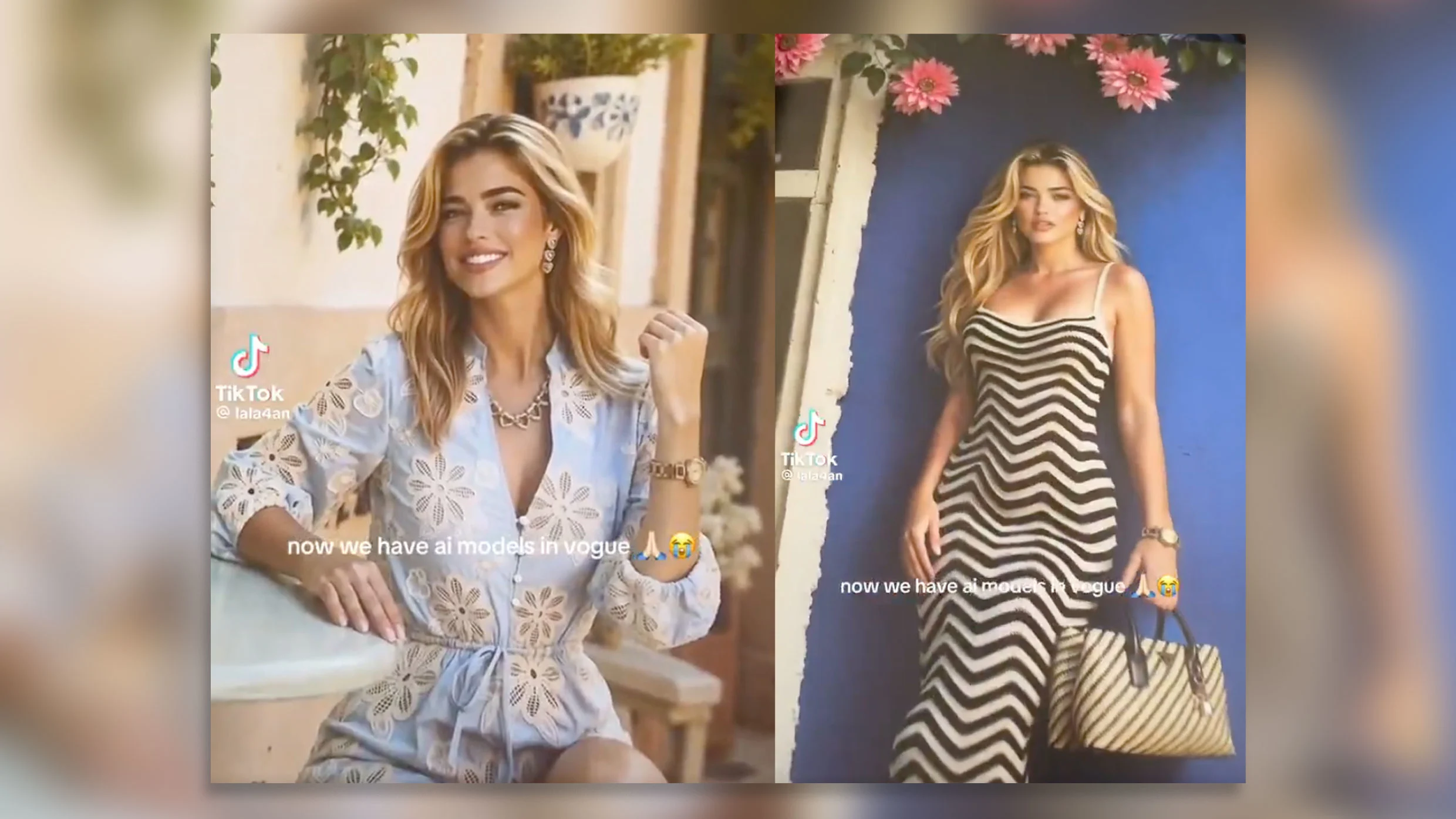
Overview of the Controversy
Vogue’s August issue features an advertisement for Guess showcasing an AI-generated model, sparking significant backlash. The model, who appears in a striped dress and floral playsuit, is noted to be AI-created in small print. While Vogue claims this was not an editorial choice, many readers are outraged, calling it a sign of the magazine’s decline. Critics argue that using AI models reflects a lack of creativity and authenticity. Some subscribers have even canceled their subscriptions over this decision, expressing disappointment at Vogue’s shift towards artificial representation.
Key Points of Discussion
- The AI model’s presence in Vogue is not an isolated incident; previous issues have also featured AI-generated elements.
- Critics argue that this move makes the magazine appear cheap and desperate for attention.
- The agency behind the AI model, Seraphinne Vallora, claims to have tried showcasing diverse models but faced challenges in gaining traction.
- Research indicates that a significant portion of Gen Z is influenced by AI-generated figures in their purchasing decisions, raising questions about the impact of AI on beauty standards.
Significance of the Issue
This controversy highlights a broader trend of AI’s integration into fashion and media. As AI models become more common, they may reinforce unrealistic beauty standards, affecting how individuals perceive themselves. The backlash against Vogue reflects a growing concern about authenticity in a world increasingly dominated by artificial imagery. The discussion around these AI models raises important questions about the future of representation in fashion and the values that consumers prioritize. As the industry evolves, it may need to balance innovation with genuine human connection and creativity.





